In brief
- Almond paste and marzipan are both an almond-and-sugar paste; it is the almond percentage that makes the difference.
- Almond paste generally has a higher almond content and is intended for baking.
- Marzipan is finer and pliable, ideal for shaping and colouring.
- In practice, almond paste is used in almond sticks and filled biscuits.
- Quality depends on real almond, not on added flavourings.
Almond paste or marzipan? In the bakery the words are often used interchangeably, even though they do not mean exactly the same thing. At Silly, a Belgian manufacturer since 1988, we clarify the difference so that you always choose the right product for the right recipe.
What is almond paste?
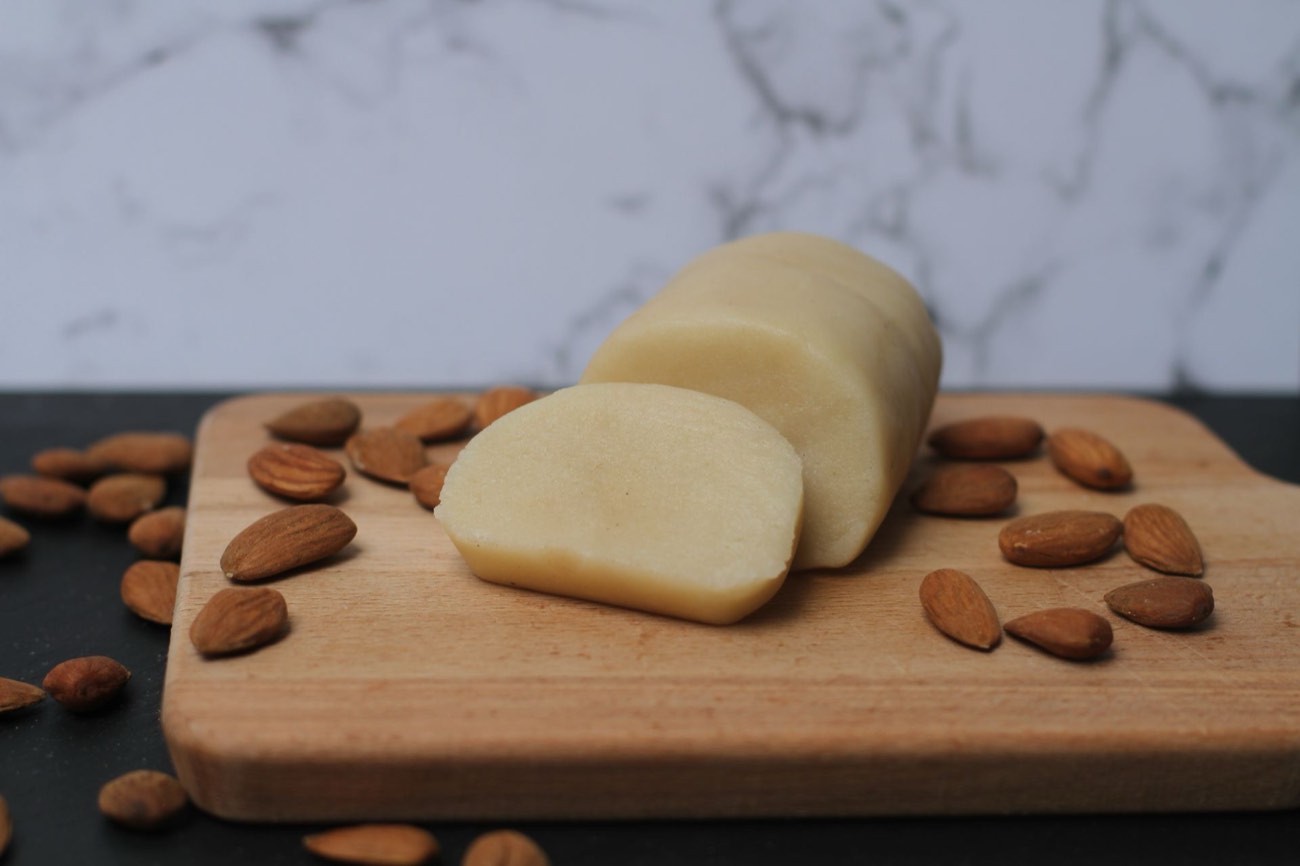
Almond paste is a paste of finely ground almonds and sugar, usually in equal parts (around 50/50). That high almond content gives a pronounced almond flavour and makes the paste particularly suited to baking: it holds its structure in the oven.
That is why you find almond paste in the almond stick, filled speculoos, filled biscuits and almond rolls. It is meant less for modelling than for baking as a filling.
What is marzipan?
Marzipan is likewise an almond-and-sugar paste, but usually finer in structure and more supple, with an almond percentage that can vary more widely. It is made to knead, shape and colour.
That is why marzipan is the product of choice for figurines, cake decoration and filled chocolate. Read more about how marzipan is made in our article « Making marzipan ».
Almond paste or marzipan: the comparison
The difference summarised, so you can choose quickly:
| Characteristic | Almond paste | Marzipan |
|---|---|---|
| Almond content | High (approx. 50 %) | Variable (22–50 %) |
| Texture | Firmer, grainy | Finer, supple |
| Purpose | Baking (filling) | Shaping, colouring, modelling |
| Typical use | Almond stick, filled biscuits | Figurines, decoration, chocolate |
In short: almond paste you bake, marzipan you model. Anyone wanting to shape finely chooses a higher almond percentage for better shape retention.
À retenir: In short: almond paste you bake (high almond content, holds structure), marzipan you model (finer, supple, colourable).
Which almond percentage to choose?
The almond percentage is the real quality dial. The higher it is, the finer and more aromatic the paste, but also the more expensive. Silly offers five qualities (22 %, 30 %, 33 %, 40 %, 50 %) and adapts the percentage to your specifications.
For filled biscuits that must bake, you often choose a higher content; for figurines that must hold their shape, likewise. For large runs and fillings, a lower percentage may suffice. Discover our range of marzipan and almond paste.
How do you recognise quality?
Good almond paste or marzipan tastes of real almond, not of added almond flavouring. A fine, smooth texture without a greasy film points to well-controlled grinding (too much heat makes the paste greasy).
As a manufacturer, Silly grinds the almonds itself in Brussels (Jette), which guarantees consistent fineness and flavour, batch after batch, with FSSC 22000 certification.
Le saviez-vous ?: Good almond paste or marzipan tastes of real almond, not of added flavouring: a fine, non-greasy texture reveals well-controlled grinding.
Frequently asked questions about almond paste and marzipan
What is the difference between almond paste and marzipan?
Both are an almond-and-sugar paste. Almond paste generally has a higher almond content and is intended for baking; marzipan is finer and more supple, made for shaping, colouring and modelling.
Can I use marzipan instead of almond paste?
For baking it is less ideal: marzipan with a lower almond content can melt or be too sweet. For filled biscuits, better choose almond paste or marzipan with a high almond percentage.
What almond percentage does almond paste have?
Classic almond paste sits around 50 % almonds, which gives a pronounced flavour and good baking stability. Silly offers percentages from 22 % to 50 %, adaptable to your recipe.
What do you use almond paste for?
Mainly for baking: almond stick, filled speculoos, filled biscuits, almond rolls. It holds its structure in the oven, unlike a supple marzipan.
Does marzipan contain gluten?
Basic marzipan (almonds and sugar) contains no gluten, but always check the label and the risk of cross-contamination with the manufacturer.
Where do I buy almond paste and marzipan in Belgium?
Silly Belgium makes both in Brussels (Jette) since 1988, in five almond percentages and made to measure. Request a sample via the contact page.
Sources
Got a project? Let's talk.
Silly Belgium has been making marzipan, hazelnut crunch, nougatine and ground almonds in Brussels since 1988. Request a sample or a tailored quote.
Request a sample