In brief
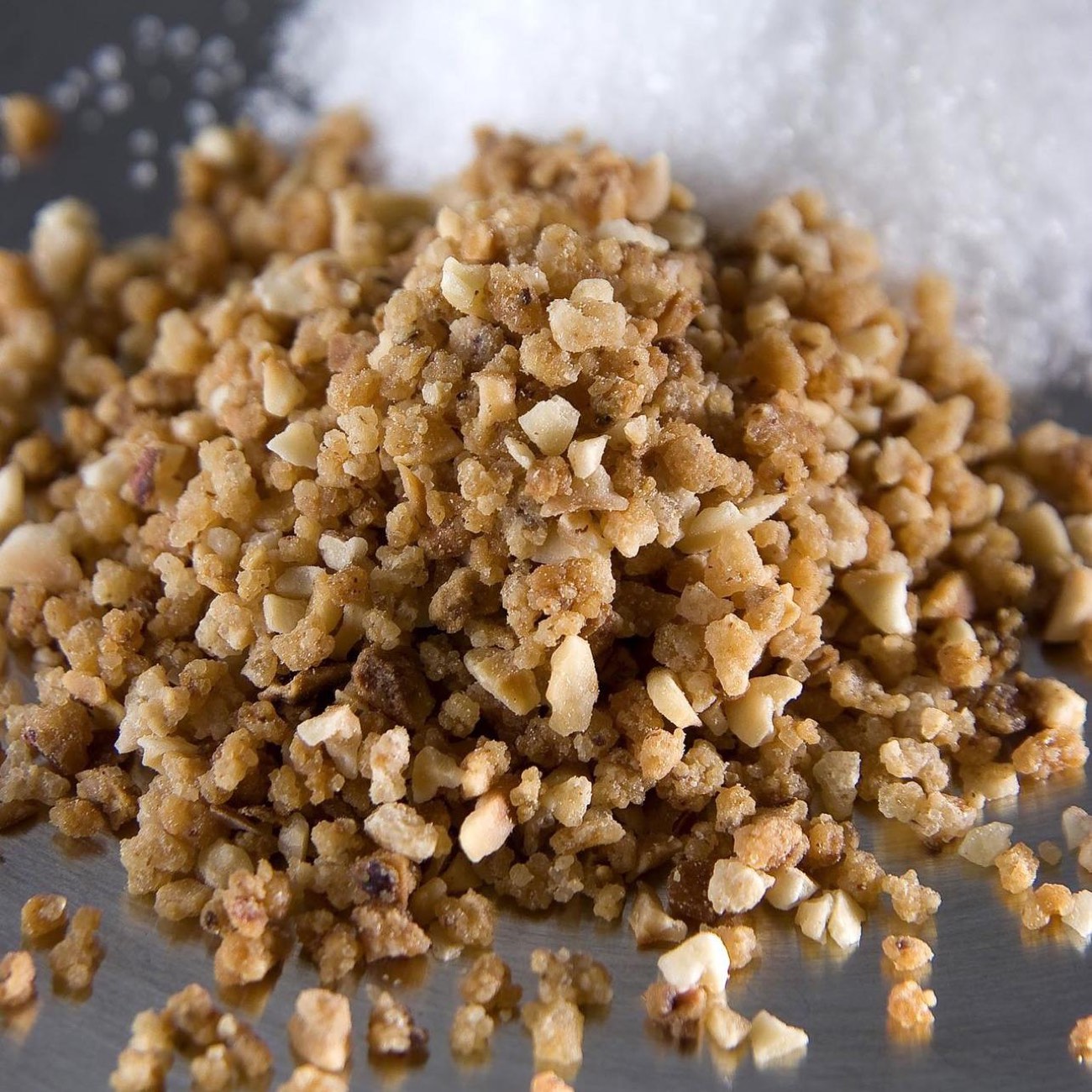
- Brésilienne = crushed and roasted hazelnuts coated in crystallised sugar.
- In France, it is called « praligrains ».
- It stays in grains, crunchy — not to be confused with nougatine (slab) or praliné (smooth paste).
- Two grain sizes: 1–2 mm (fine) and 2.5–4 mm (crunchier).
- Uses: decoration, ice creams, fillings and praline finishes.
Few people know the word « brésilienne » — and yet this golden crunch is everywhere in pastry, ice cream making and chocolate making. Silly produces up to 8,000 kg of it per day in Brussels. Here is everything you need to know about this specialist ingredient.
What is brésilienne?
Brésilienne is a confectionery made of crushed and roasted hazelnuts, coated in crystallised sugar. The process gives it its characteristic crunchy texture and its richly caramelised flavour. It comes in loose grains, ready to sprinkle, incorporate or coat.
Le saviez-vous ? — « Brésilienne » in confectionery has nothing to do with Brazil: it is a Belgian trade term for caramelised nut pieces (the praligrains).
Where does the name « praligrains » come from?
« Brésilienne » is the common name in Belgium; in France, the same product is called « praligrains » or « pralin en grains ». The word evokes praliné, but the texture is the opposite: here, the grain stays whole and crunchy, it never becomes a paste.
How is brésilienne made?
Three mastered steps make all the difference: roasting the hazelnuts (which develops the aromas), crushing them to the desired grain size, then coating them with crystallised sugar brought to the right temperature. The consistency of the roasting and the coating determines the final quality — an overcooked grain turns bitter, an uneven coating sticks or falls apart.
Fine or crunchy grain: which grain size?
| Grain size | Result | Ideal use |
|---|---|---|
| 1–2 mm (fine) | Delicate texture, discreet | Cake decoration, ice cream coating, fine finishes |
| 2.5–4 mm (coarse) | Pronounced crunch, visible | Fillings, inclusions, pralines, indulgent toppings |
The choice depends on the desired effect: discretion and melt, or unabashed crunch.
Brésilienne, nougatine or praliné: what are the differences?
| Product | Texture | Production |
|---|---|---|
| Brésilienne (praligrain) | Crunchy, loose grains | Crushed hazelnuts coated in sugar |
| Nougatine | Hard, brittle slab | Caramelised sugar + nuts, in a copper pan |
| Praline | Smooth, melting paste | Caramelised nuts ground to a fluid consistency |
In short: brésilienne brings crunch in grains, nougatine a brittle slab, praliné the melt. They are often combined in a single creation.
À retenir — Remember the texture: brésilienne is in grains, nougatine in a slab, praliné in a paste. Three products, three uses.
How to use brésilienne?
As sweet decoration on cakes, tarts and entremets; as topping or inclusion in ice creams — it keeps its crunch even at -18 °C; as filling and praline finish for chocolatiers. A fine grain for a delicate result, a coarser grain for a pronounced crunch.
How to store brésilienne?
Like any sugar-coated product, brésilienne is sensitive to humidity, which makes it stick and lose its crunch. It is kept dry, at room temperature, in an airtight container. Well protected, it keeps for a long time without deterioration.
Frequently asked questions about brésilienne
What is brésilienne?
A preparation of crushed and roasted hazelnuts coated in crystallised sugar, crunchy and caramelised. In France, it is called « praligrains ».
Why is it called « praligrains »?
It is the French name for brésilienne: a pralin left in grains, as opposed to praliné which is ground into a paste.
What is the difference between brésilienne and nougatine?
Brésilienne stays in crunchy grains; nougatine is a caramelised sugar with nuts, spread into hard slabs cut into rounds, squares or granules.
Brésilienne or praliné?
Praliné is a smooth and melting paste; brésilienne keeps its whole and crunchy grains. They are often combined in chocolate making.
Which grain size to choose?
1–2 mm for a delicate decoration and ice cream coating, 2.5–4 mm for a pronounced crunch in fillings and pralines.
How to store brésilienne?
Dry, at room temperature, in an airtight container. Its enemy is humidity, which makes it stick and lose its crunch.
Where to find brésilienne in Belgium?
Silly Belgium has been making brésilienne (praligrain) in Brussels since 1988, in two grain sizes and in professional packaging.
Sources
- Nougatine (Wikipedia)
- Pralin / praliné (Wikipedia)
- Choprabisco — Belgian federation of chocolate, biscuits and confectionery
Got a project? Let's talk.
Silly Belgium has been making marzipan, brésilienne, nougatine and ground almonds in Brussels since 1988. Request a sample or a tailored quote.
Request a sample