In brief
- Marzipan is a paste of finely ground blanched almonds and sugar.
- « Marzipan » (Belgium) and « almond paste » (France) refer to the same product; the almond content makes the difference.
- Almond content ranges from 22% to 50%: the higher it is, the finer and more aromatic the paste.
- Marzipan can be baked, takes colour and keeps for several months in the right conditions.
- Professional quality comes down to the grinding, the temperature and consistency from one production run to the next.
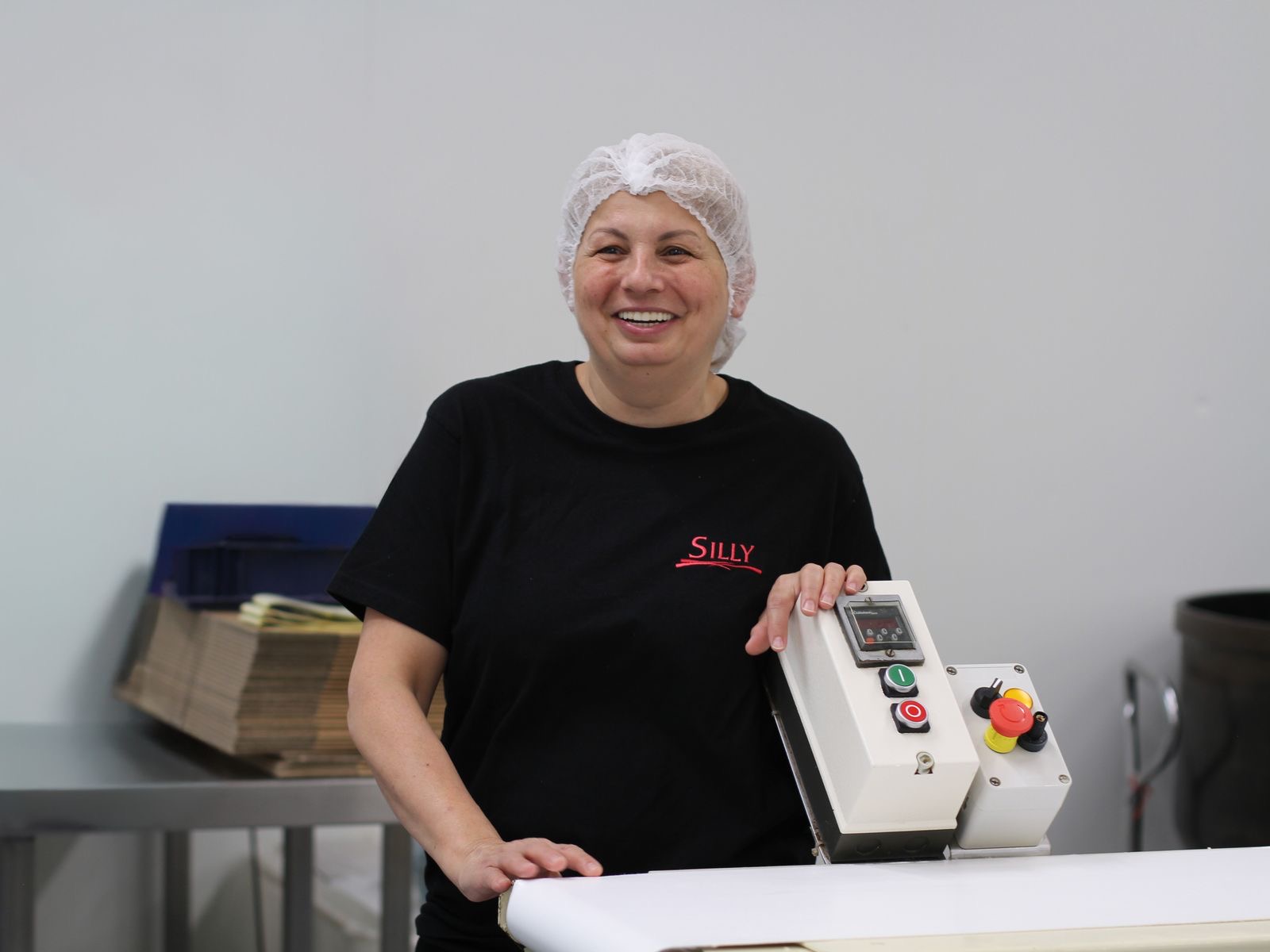
Marzipan looks simple: almonds, sugar. Yet everything changes between an industrial paste and an artisan marzipan: the choice of almonds, the fineness of the grinding, the almond content. At Silly, a Belgian manufacturer since 1988, here is what really happens, from the almond to the bar, along with answers to the questions asked by artisans and discerning enthusiasts.
What exactly is marzipan?
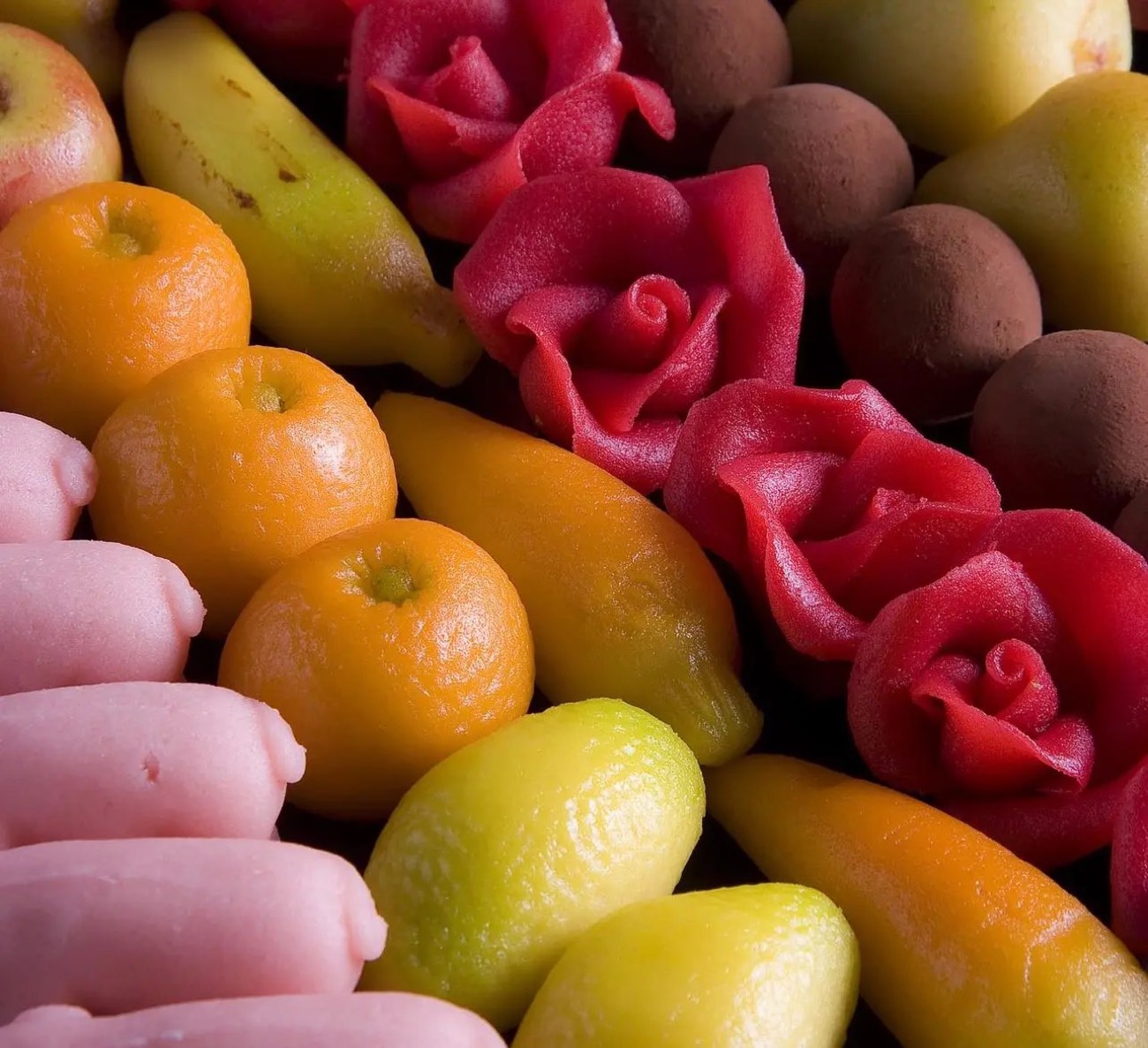
Marzipan is a confection made of finely ground blanched almonds and sugar, worked into a smooth, soft and pliable paste. It is used plain, shaped into figurines, filled, coated in chocolate or incorporated into pastry.
Its signature on the palate comes down to one sentence: the sweetness of the sugar balanced by the subtle bitterness of the almond. The more almond there is, the more pronounced the character: that is the whole point of the almond content, which we return to below.
Marzipan or almond paste: what's the difference?
It is the most frequently asked question, and the answer is surprising: they are two names for the same product. « Marzipan » is the common term in Belgium, « almond paste » the one used in France. The real distinction is not semantic but comes down to the almond content and the fineness of the grinding.
The vocabulary in fact varies from country to country for a very similar product:
| Country | Name | Distinctive feature |
|---|---|---|
| Belgium | Marzipan | Common everyday term, variable almond content |
| France | Almond paste | Often classified by % almond (confiseur, fondant…) |
| Germany | Marzipan | Lübeck: regulated minimum almond content, renowned as premium |
| Italy | Marzapane | Shaped into artistic forms (frutta martorana) |
| Spain | Mazapán | A must-have of the end-of-year festivities |
Bear in mind: don't rely on the name on the label alone: look at the almond percentage, as it is what determines quality and taste.
À retenir : « Marzipan » and « almond paste » refer to the same product: judge not by the name on the label, but by the almond percentage, the only true marker of quality.
What ingredients make a real marzipan?
A good marzipan requires only two essential ingredients: almonds and sugar. Everything else is optional: natural flavourings, colourings, inclusions (candied orange, pistachio, chia seeds): and serves to vary the product without betraying its base.
The quality of the almond is decisive. Silly selects its own under the skies of Spain, the United States and Portugal, where the fruit ripens slowly. Every batch is tasted, smelled and tested before it goes into production: a good marzipan begins well before the first bite.
How is marzipan made? The 6 steps
Artisan production follows a precise logic in which each step shapes the taste and texture:
1. Selecting the almonds: exceptional almonds are chosen, tasted before each production run.
2. Blanching: the almonds are stripped of their skin to reveal their pale heart and avoid any unwanted bitterness.
3. Dosing almonds/sugar: the almond content (22% to 50%) is set according to the intended use.
4. Fine grinding: almonds and sugar are ground into a homogeneous paste, with no perceptible grain. Controlling the temperature is crucial here: too much heat releases the almond oil and makes the paste greasy.
5. Kneading and resting: the paste is worked to the desired texture: soft, mellow, almost melting.
6. Shaping: bars, figurines, decorations: the paste takes its form, sometimes coloured or baked for the festive season.
Erreur fréquente : Trying to rush the grinding overheats the paste: the almond oil comes out and the marzipan turns greasy. Controlling the temperature takes priority over speed.
Which almond content to choose (22% to 50%)?
The almond content is the real quality/price dial. Here is how to steer it according to use:
| Almond content | Profile | Ideal use |
|---|---|---|
| 22 % | Sweeter, supple | Small decorations and covering cakes, a use close to sugarpaste |
| 30–40 % | Balanced | Figurines, chocolate coatings, everyday pastry |
| 50% | Rich in almond, less sweet | Modelling and figurines, praline fillings, applications seeking almond flavour |
At Silly, five grades coexist (22%, 30%, 33%, 40%, 50%) and the content can be tailored to your specifications.
Can marzipan be baked?
Yes: marzipan can be baked, and it is a common use among artisans, notably for decorations and festive creations. When baked, it browns lightly and develops a fine crust while keeping a soft heart.
A few markers: a moderate oven (around 160–180 °C), close watching (sugar colours fast), and a marzipan with enough almond content not to dry out.
How should marzipan be stored?
Marzipan keeps for several months in the right conditions: away from air, light and heat, in a cool, dry place (12–18 °C). Enemy number one is drying out: in contact with air, the surface hardens.
The best-before date is on the packaging, and on our bars it is printed on the product itself: it applies to marzipan that has stayed properly protected. Avoid humidity, which encourages the sugar to grain.
Can you make marzipan at home?
Yes: blend almond powder with icing sugar and a little egg white or syrup until you get a paste. It is feasible, but the fineness of a professional grind remains hard to reach with a household blender.
A manufacturer masters the fineness of the grinding, the temperature and consistency from one production run to the next: precisely what sets a professional marzipan apart from a home preparation, especially for figurines or regular runs.
Frequently asked questions about marzipan
What is the difference between marzipan and almond paste?
It is the same product: « marzipan » is the Belgian term, « almond paste » the French one. The real difference lies in the almond content: the higher it is, the finer and more aromatic the paste.
What is marzipan made from?
Essentially finely ground blanched almonds and sugar. You can add flavourings, colourings or inclusions (orange, pistachio, chia).
What almond content makes a good marzipan?
From 22 % to 50 %. The 22 % suits small decorations and covering cakes, the 30 % and 40 % figurines and everyday pastry, the 50 % fine modelling, praline fillings and anything seeking almond flavour.
Can marzipan be baked?
Yes. Marzipan is baked at around 160–180 °C, browns and forms a fine crust while keeping a soft heart. This is common for decorations and festive creations.
How should marzipan be stored?
In the right conditions, away from air, light and heat, cool and dry (12–18 °C), it keeps for several months. Respect the best-before date on the packaging, and protect it from humidity, which encourages the sugar to grain.
Can you make marzipan at home?
Yes, with ground almonds, icing sugar and a binder. Fineness and stability remain harder to achieve than with professional grinding.
Does marzipan contain gluten?
Basic marzipan (almonds + sugar) contains no gluten, but always check the label and the risks of cross-contamination depending on the manufacturer.
Where can I buy professional marzipan in Belgium?
Silly Belgium has been making marzipan in Brussels (Jette) since 1988, in formats and almond contents suited to professionals. Request a sample via the contact page.
Sources
- Marzipan: history and definition (Wikipedia)
- Almond paste (Wikipedia)
- FSSC 22000 certification (official body)
Got a project? Let's talk.
Silly Belgium has been making marzipan, hazelnut crunch, nougatine and ground almonds in Brussels since 1988. Request a sample or a tailored quote.
Request a sample