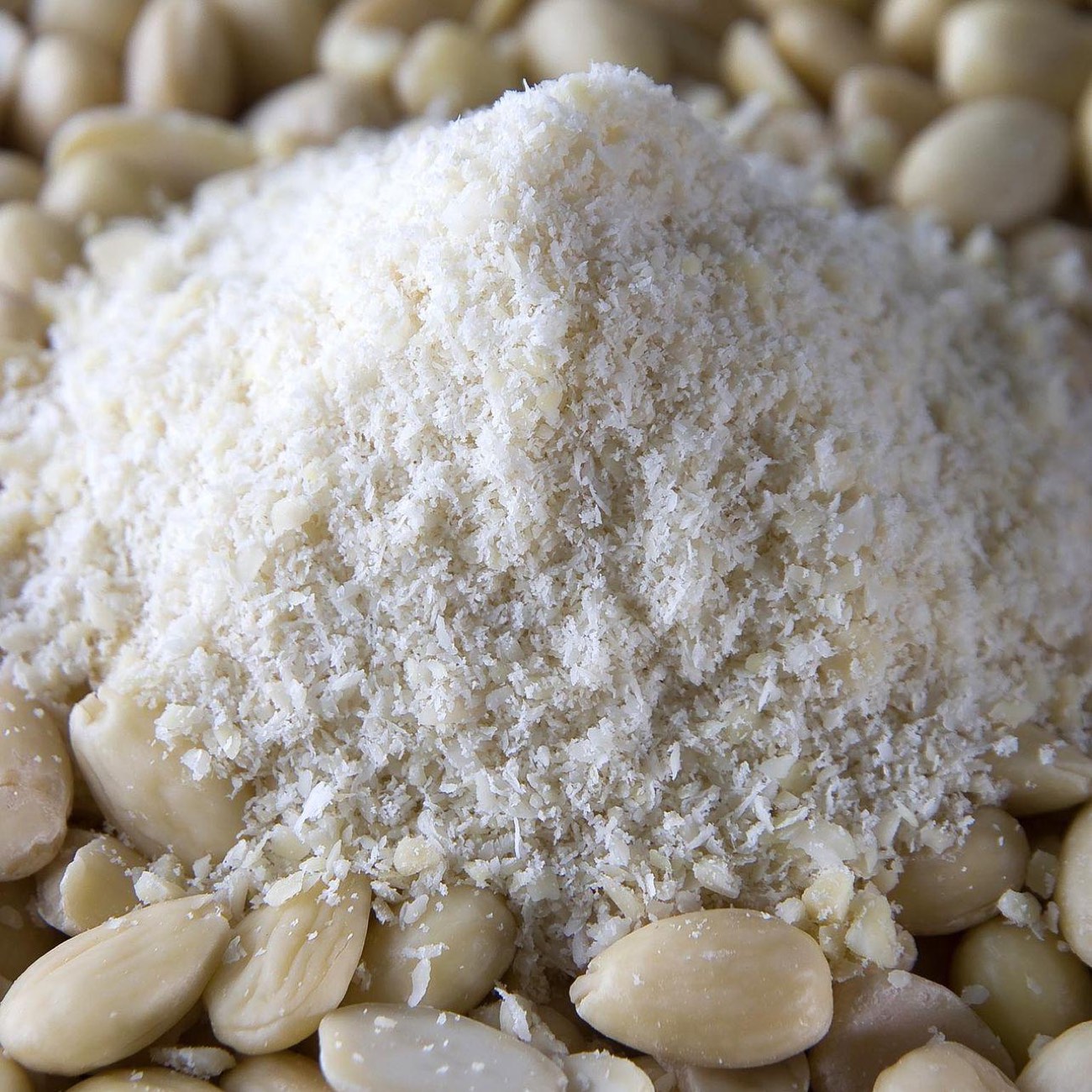
In brief
- Almond powder and almond flour are both ground almonds.
- The powder has a sandy texture; the flour is often finer.
- In professional baking, the terms are largely interchangeable: what matters is the particle size.
- The base for macarons, financiers, frangipane and almond cream.
- Naturally gluten-free, keep cool (the fat goes rancid).
Almond powder, almond flour, ground almonds: on the labels, the names get mixed up and sow doubt. Silly, which has been grinding almonds and hazelnuts in Brussels since 1988, sets the record straight: no jargon, with concrete uses.
Almond powder or almond flour: the real difference
Both refer to ground almonds. The distinction is mainly a matter of fineness and processing:
| Almond powder | Almond flour | |
|---|---|---|
| Texture | Sandy, grainy | Finer, powdery |
| Skin | Blanched (white) or raw | Generally blanched |
| Typical use | Creams, cakes, financiers | Macarons, very fine textures |
In professional practice, the terms are largely interchangeable: what matters is the particle size suited to your recipe.
À retenir : In practice, « almond powder » and « almond flour » often refer to the same product: look above all at whether the almond is blanched (white) or raw, and at the fineness of the grind.
Blanched (white) or raw: which powder to choose?
Blanched almond powder (white) has the skin removed: mild taste, light colour: ideal for macarons and creams where appearance counts. Raw almond powder keeps the skin: a more rustic taste and darker colour, prized in certain biscuits and cakes.
How is almond powder made?
The almonds are (depending on the product) blanched, dried and then ground to the desired particle size. The delicate point is the temperature: grinding too hot makes the oil seep out and forms a paste. A manufacturer controls the grind to obtain a dry and regular powder, from one production run to the next.
Erreur fréquente : Grinding almonds yourself in a household blender heats them and releases the oil: you get a greasy paste rather than a dry powder. In production we keep the temperature of the product as low as possible while grinding; afterwards the powder keeps very well at room temperature in good conditions, and can be refrigerated if preferred.
For which uses?
Almond powder/flour is the base of many classics: macarons, financiers and frangipane, almond cream and fillings, biscuits and cakes for added softness and richness. It also partially replaces wheat flour in gluten-free baking.
What to replace almond powder with?
| Substitute | Effect | Point of attention |
|---|---|---|
| Hazelnut powder | Marked roasted taste | Perfect with chocolate |
| Wheat flour (partial) | Less rich, drier | Reduce the sugar slightly |
For macarons, fine almond powder remains the most reliable.
Gluten-free and storage
Almond powder is naturally gluten-free and rich in proteins and good fats. But that fat makes it prone to going rancid: keep it cool, away from air, light and heat, and respect the best-before date on the packaging.
Frequently asked questions
What is the difference between almond powder and almond flour?
Both are ground almonds; the powder is sandier, the flour often finer. In baking, the terms are largely interchangeable: the particle size counts.
Can you replace almond flour with almond powder?
Yes, they are almost equivalent; simply adjust the fineness according to the recipe (macarons require a very fine powder).
Blanched (white) or raw almond powder?
Blanched (white) for a mild taste and a nice appearance (macarons, creams); raw (with skin) for a more rustic taste in certain biscuits and cakes.
Is almond powder gluten-free?
Yes, pure almond powder is naturally gluten-free. Check the label for the risk of cross-contamination.
What to replace almond powder with?
With hazelnut powder (roasted taste) or partially with wheat flour (less rich result). For macarons, fine almond powder remains the most reliable.
How to store almond powder?
Cool, away from air, light and heat, and respecting the best-before date on the packaging, as the fat can go rancid.
Where to buy almond powder in bulk in Belgium?
Silly Belgium has been grinding almonds and hazelnuts to order in Brussels since 1988, in professional packaging. Request a sample via the contact page.
Sources
Got a project? Let's talk.
Silly Belgium has been making marzipan, hazelnut crunch, nougatine and ground almonds in Brussels since 1988. Request a sample or a tailored quote.
Request a sample